This Marrakech desert tour 3 days experience takes you from the lively streets of Marrakech to the golden dunes of Merzouga Sahara through some of Morocco’s most spectacular landscapes. Cross the High Atlas Mountains, visit the UNESCO World Heritage Site of Ait Ben Haddou, explore Todra Gorge, ride camels across Erg Chebbi dunes, and spend the night in a traditional or luxury desert camp beneath the stars.
Perfect for travelers who want to experience the real Sahara Desert in limited time, this 3-day desert tour from Marrakech combines adventure, culture, history, and authentic Amazigh hospitality in one unforgettable journey.
Many travelers visiting Morocco wonder if the long journey to Merzouga is really worth it. For most, that question disappears the moment the first dunes of Erg Chebbi appear on the horizon.
This tour is not only about reaching the desert — it is about experiencing the incredible diversity of Morocco along the way. In only three days, the scenery changes constantly from mountain landscapes and green valleys to rocky desert plains and endless golden dunes.
Because we regularly travel this route ourselves, we know where to stop for the best panoramic views, local restaurants, and authentic experiences away from overly touristy places. During winter, travelers are often surprised to see snow in the Atlas Mountains before arriving in the warm desert landscapes later the same day.
The route also offers a deeper understanding of Morocco’s history and culture. For centuries, caravan traders crossed these mountains carrying salt, gold, spices, and textiles between the Sahara and Marrakech. Many Amazigh villages along the route still preserve traditions, architecture, and ways of life that have existed for generations.
Distance: Approximately 340 km
Driving Time: Around 6–7 hours with stops
At 8:00 AM, your journey starts in Marrakech. Leaving the busy city behind, you will travel toward the spectacular High Atlas Mountains. As the road climbs higher, the scenery changes dramatically with rugged landscapes, traditional Amazigh villages, and winding mountain roads leading through remote communities.
You will cross the famous Tizi n’Tichka Pass at 2,260 meters above sea level, the highest paved mountain pass in Morocco. Along the way, there will be several scenic stops to admire panoramic views and take photos of the beautiful mountain landscapes.
The journey then continues to Aït Ben Haddou, one of Morocco’s most famous ksars and a UNESCO World Heritage Site. Built from clay and earth centuries ago, this fortified village was once an important stop for caravan traders traveling between Marrakech and the Sahara Desert. Its unique architecture has made it a popular filming location for productions such as Gladiator, Kingdom of Heaven, The Mummy, and Game of Thrones.
After lunch near Aït Ben Haddou or in Ouarzazate, often called the Hollywood of Morocco, the tour continues along the famous Road of a Thousand Kasbahs. You will pass through the beautiful palm groves of Skoura and continue across the Valley of Roses in Kalaat M’Gouna, known for its rose products and annual Rose Festival.
By late afternoon, you will arrive in the stunning Dades Valley, famous for its dramatic rock formations and impressive canyon landscapes carved by the Dades River. Dinner and overnight stay will be in a traditional riad or guesthouse in Dades Valley.
Tizi n’Tichka Pass
Cross the highest mountain pass in Morocco while enjoying breathtaking views over the High Atlas Mountains and traditional Amazigh villages.
Aït Ben Haddou
Discover Morocco’s most iconic ksar and UNESCO World Heritage Site with its historic mud-brick architecture and cinematic history.
Ouarzazate
Enjoy a stop in the gateway to the Sahara Desert, famous for its film studios and desert atmosphere.
Skoura Palm Grove
Travel through one of Morocco’s most beautiful palm oases filled with ancient kasbahs and lush greenery.
Valley of Roses
Pass through the heart of Morocco’s rose-growing region, famous for rose water, oils, and local handicrafts.
Dades Valley and Dades Gorge
End the day surrounded by spectacular canyon landscapes and unique rock formations before spending the night in the valley.
Travel Tip: Leaving Marrakech early allows you to visit Aït Ben Haddou before the crowds and arrive in Dades Valley in time to enjoy the sunset views.
Distance: Approximately 285 km
Driving Time: Around 5–6 hours with stops
After breakfast in the Dades Valley, the road gradually opens into wider and drier landscapes as you head toward Todra Gorge. This is where travelers begin to notice how quickly Morocco’s scenery transforms — from green valleys and mountain roads into deep canyons and open desert terrain.
As you enter Todra Gorge, the road becomes narrow and winds between towering rock walls with the river running alongside it in places. We usually take a short stop here so travelers can walk along the river and explore the nearby palm groves. Even in this arid region, small farming areas still exist, and local families continue working the land and herding animals using traditional methods passed down for generations.
Continuing the journey, the landscape becomes more open as you pass through small desert towns like Erfoud. This region is famous for its fossils and dates. Along the roadside, you may see workshops where locals craft items from stone containing real prehistoric marine fossils — evidence that this entire area was once covered by the ocean millions of years ago.
As you get closer to Merzouga, the scenery becomes increasingly minimal. Villages become rare, the road stretches endlessly, and suddenly the first view of the Erg Chebbi dunes appears on the horizon. Most travelers stop here automatically — it is a breathtaking sight that feels almost unreal at first glance.
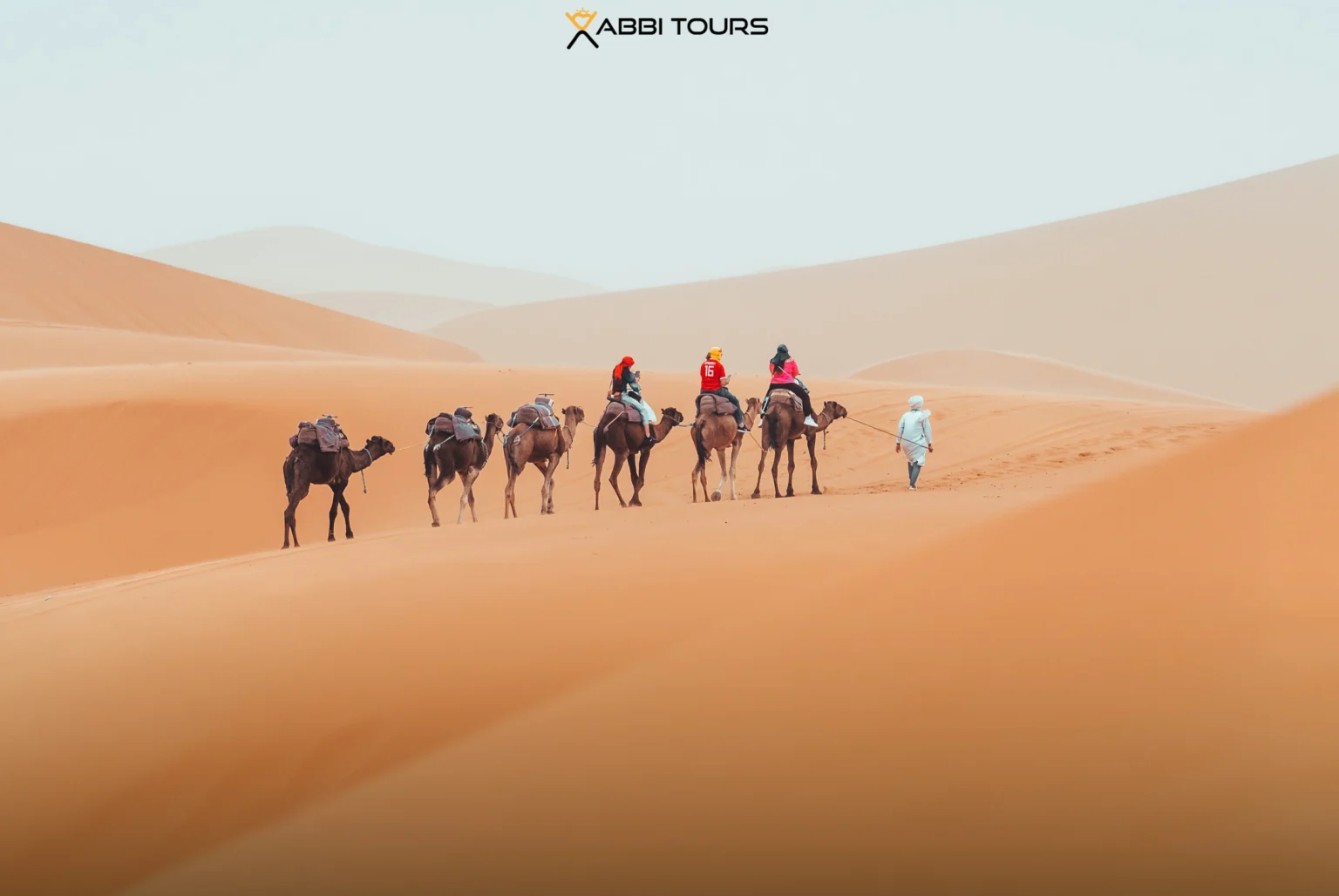
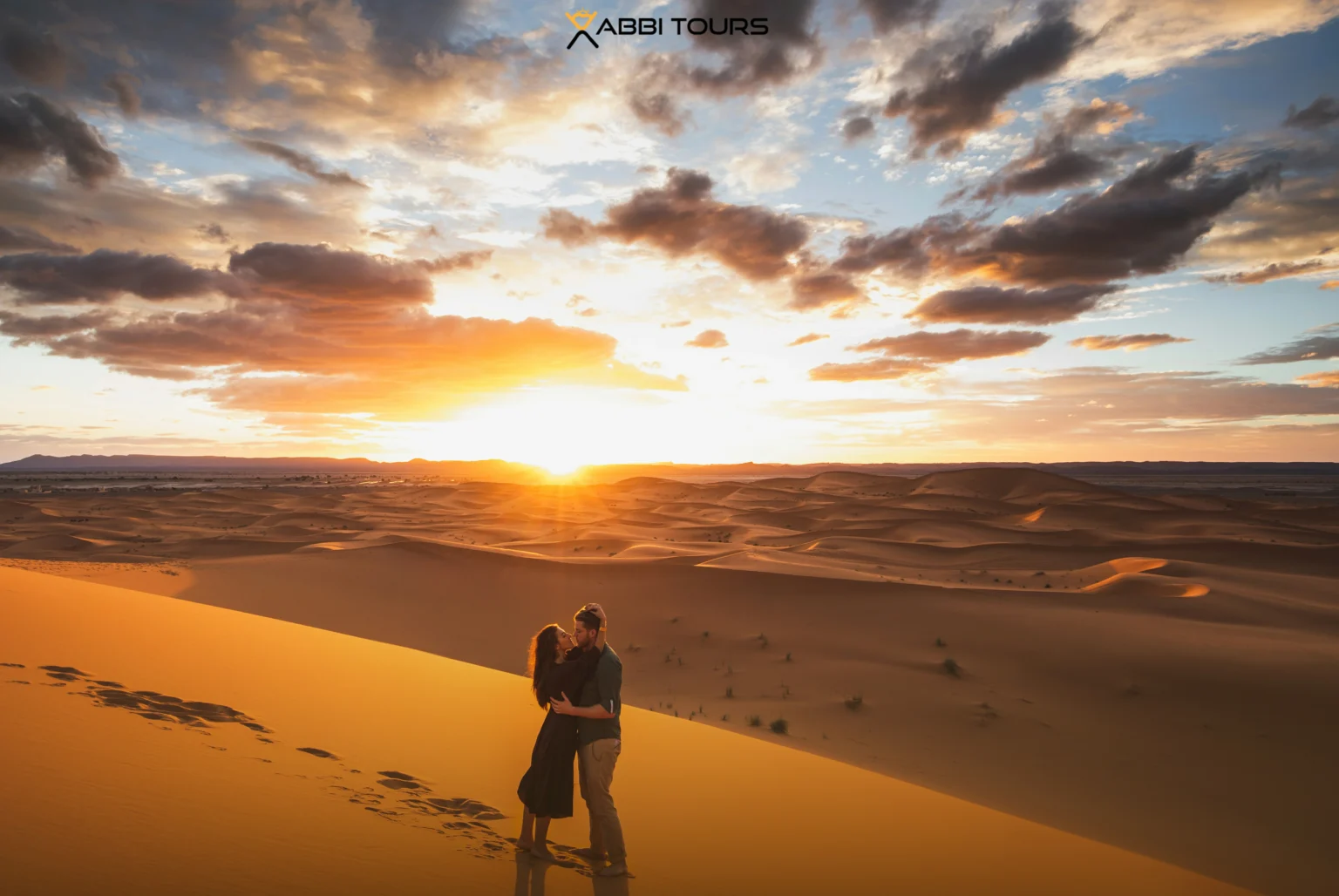
From here, you leave the vehicle and continue by camel into the dunes in the late afternoon. The pace is slow and peaceful, and the atmosphere changes completely as the sun begins to set. The sand shifts in color from bright gold to deep orange, and the silence of the desert becomes almost complete except for the wind.
At the desert camp, dinner is served in a shared dining area where guests gather around the fire. Depending on the camp, Amazigh musicians may perform traditional Gnawa music with drums and chanting. Some nights are lively, others more relaxed, but the desert atmosphere always feels unique and authentic.
Accommodation options range from simple traditional Berber tents to luxury private tents equipped with proper beds and private bathrooms.
Todra Gorge
Walk through one of Morocco’s most impressive canyons, where 300-meter-high rock walls rise dramatically on both sides of the river.
Erfoud
Pass through a desert town known for its fossil workshops and date production, offering a glimpse into Morocco’s ancient geological history.
Erg Chebbi Dunes
Witness the first breathtaking view of the Sahara’s golden sand dunes rising from the stone desert near Merzouga.
Camel Trekking at Sunset
Ride a camel into the heart of the dunes and watch the landscape change colors as the sun sets over the Sahara.
Merzouga Desert Camp
Spend the night under the stars in a traditional or luxury desert camp with dinner, music, and unforgettable desert silence.
Travel Tip: Bring warm clothing for the desert night — temperatures drop significantly after sunset, even during warmer months. Sunrise over the dunes is one of the most memorable moments of the entire journey.
Distance: Approximately 560 km
Driving Time: Around 9–10 hours including stops
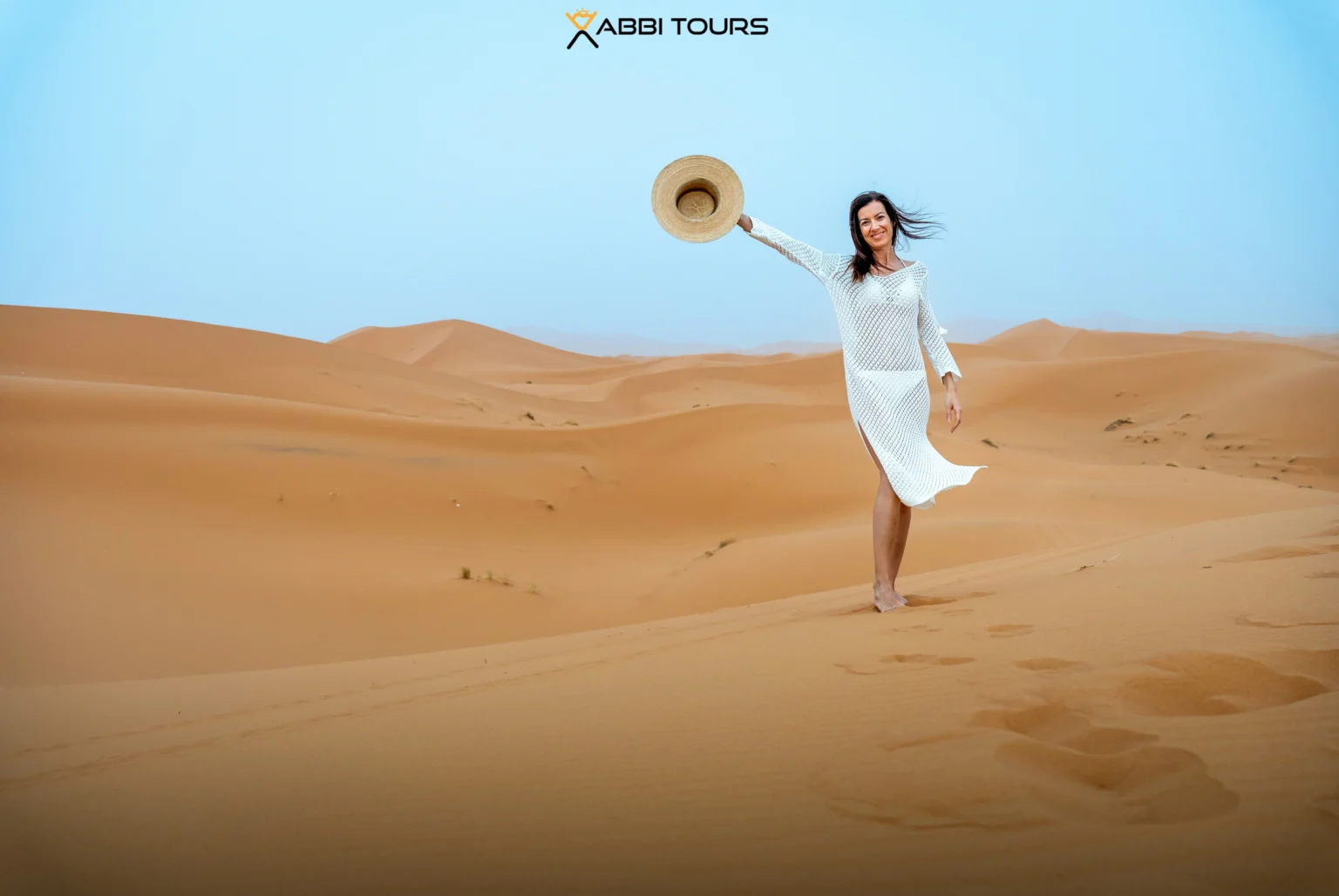
Most guests wake up early before sunrise, because the light over the dunes changes very quickly and is completely different from sunset. Many walk a few minutes away from camp to watch the dunes slowly shift from dark orange to soft gold tones.
After breakfast, you return either by camel or 4×4 back to the main road, where the journey toward Marrakech begins.
The return drive is long but varied. Instead of repeating the same scenery, the route passes through smaller villages, rocky desert plateaus, and parts of the Draa Valley, where long lines of palm trees grow along the river in contrast to the dry mountains around them.
We usually stop for breaks along the way for lunch and photos, especially in areas where the landscape changes sharply between desert and mountains.
After crossing the High Atlas Mountains again, Marrakech appears in the evening as the city lights begin to return — marking the end of the desert journey.
Many travelers compare Merzouga and Zagora before booking a desert tour.
While Zagora is closer to Marrakech, the desert landscapes there are mostly rocky and flat with smaller dunes.
Merzouga, on the other hand, offers the classic Sahara experience most travelers imagine:
• giant golden dunes
• camel trekking
• dramatic sunsets
• true desert scenery
The drive is longer, but for travelers wanting the real Sahara Desert experience, Merzouga is generally considered the better option.
Erg Chebbi · Draa Valley · High Atlas Mountains · Tizi n’Tichka · Marrakech — approx. 9 hours driving
01
Wake before dawn and climb a dune to watch the Sahara sunrise — arguably the most magical moment of the entire tour. As the first light hits the crests of Erg Chebbi, the dunes transform through shades of pink, orange, and gold in a matter of minutes.
Sunrise · Sahara · Photography · ★ Must-See
02
Return to camp after sunrise for a traditional Moroccan breakfast of mint tea, msemen flatbread, honey, and amlou. Take a final walk among the dunes before boarding your vehicle for the long but scenic drive back toward Marrakech.
Breakfast · Desert Camp · Merzouga
03
Drive through the spectacular Draa Valley, stretching over 100 km and lined with date palm groves, mud-brick villages, and ancient kasbahs along the banks of the Draa River. The contrast of lush green oasis against arid desert is one of Morocco’s most striking landscapes.
Palm Groves · Kasbahs · Scenic Drive · 100 km Long
04
Re-enter the High Atlas from the southern side via a different and equally dramatic route. The landscape shifts dramatically from desert plains to rocky gorges, cedar forests, and Amazigh mountain villages clinging to steep hillsides — with scenic stops along the way.
Mountain Scenery · Amazigh Villages · Scenic Stops
05
Make a final stop at Morocco’s highest paved mountain pass for panoramic views stretching back toward the desert and forward toward the plains of Marrakech. A fitting farewell to three days of extraordinary Moroccan landscapes.
Mountain Pass · Panoramic Views · 2,260 m · Photo Stop
06
Arrive back in Marrakech in the evening, completing a 3-day loop through some of the most breathtaking landscapes on earth — from the High Atlas to the Sahara and back. Drop-off at your riad or hotel in the medina or Gueliz district.
Marrakech · Evening Arrival · Hotel Drop-off · Tour End
Travel tip: Day 3 is the longest driving day — around 9 hours total. Leave the desert camp by 7:00 AM to enjoy the Draa Valley in daylight and arrive in Marrakech before midnight. Pack snacks and a good playlist.
Desert Camp Options in Merzouga
Choose between a traditional desert camp or a luxury desert camp, depending on your travel style. Both offer a memorable night in the Sahara under a sky full of stars.
Traditional Camp
✓ Traditional Berber-style tents
✓ Shared or private facilities available
✓ Authentic desert atmosphere
✓ Campfire, dinner, and Amazigh music under the stars
Best for: Authentic experiences and simplicity.
Luxury Camp
✓ Private tents with en-suite bathrooms
✓ Comfortable beds and upgraded amenities
✓ Hot showers and electricity
✓ Comfort combined with authentic Sahara charm
Best for: Couples and comfort seekers.
Whether you choose the traditional or luxury option, the experience of spending a night among the dunes beneath a star-filled sky remains unforgettable.
Our 3-day desert tour from Marrakech starts at just €140 per person. Please note that the final cost may vary depending on your group size, accommodation preferences, and travel season. In general, larger groups enjoy lower prices per person.
The €140 per person rate applies to groups of 15 travelers or more. For private tours or smaller groups of two people, prices start from €215 per person.
To get an exact price tailored to your trip, feel free to contact us using the form below. Our team will be happy to provide a personalized quote based on your travel needs.
Yes. Morocco welcomes many solo female travelers every year, and private desert tours are often a comfortable and flexible option.
Southern Morocco is generally known for its hospitality and welcoming atmosphere. As with any destination, normal travel awareness is recommended.
Yes. Many travelers choose to continue toward Fes after visiting Merzouga instead of returning to Marrakech. This is a popular alternative that covers even more of Morocco’s most scenic landscapes.
Sample testimonial content area